El Gouna Main Gate
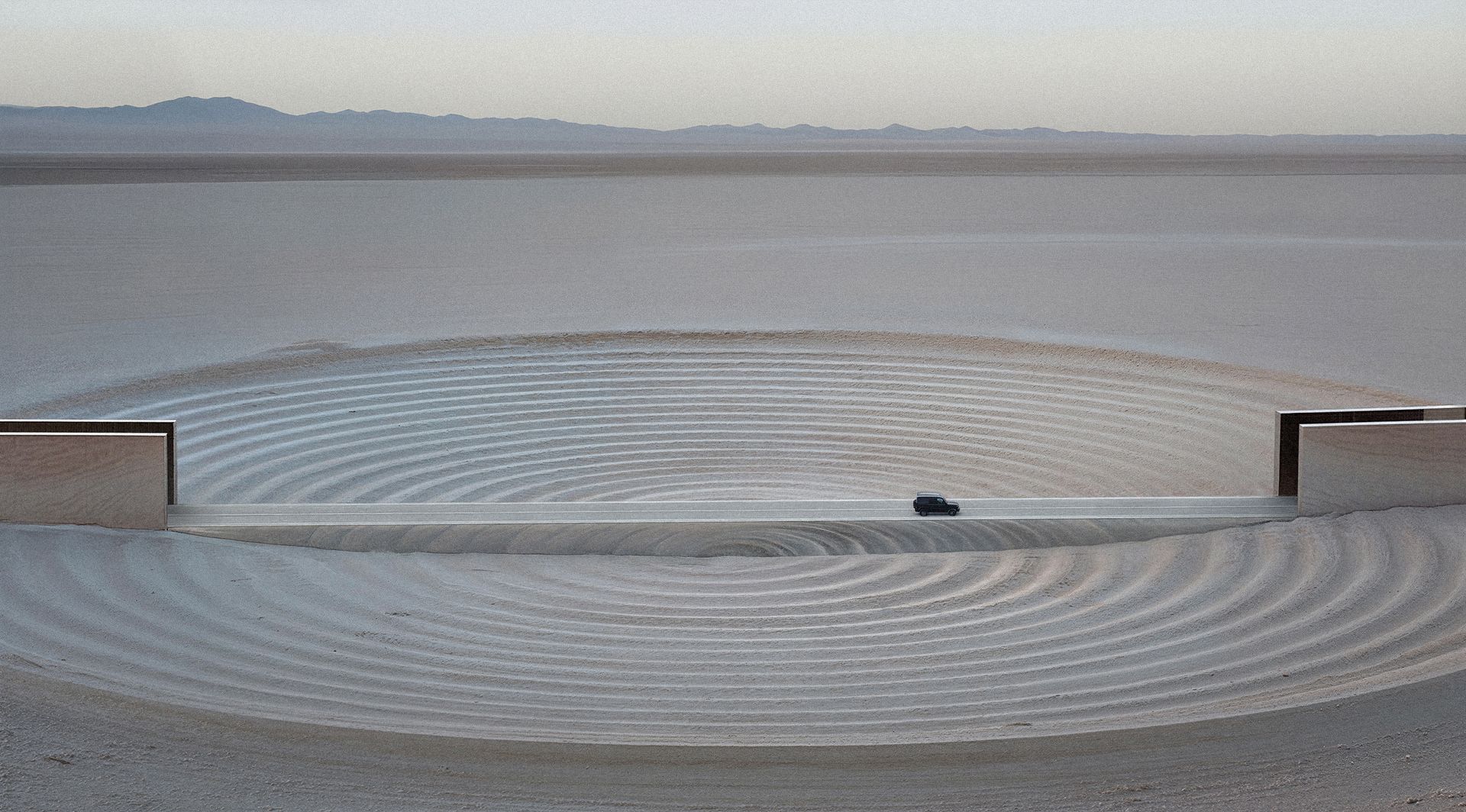
In the desert of El Gouna, a new main gateway emerges not as an object placed on the land, but as a movement arising from it. Conceived as a threshold between infrastructure and vast desert, the project redefines arrival as an experience shaped by sand, light, and time. Building from the place itself, a dune folds to reveal a welcoming oasis.
The Threshold as Landscape
The question guiding the project was simple yet profound: how can a meaningful connection be established between landscape and built environment in the immensity of the desert?
In a territory shaped by wind and time, architecture cannot compete with scale. The desert absorbs objects, softening their presence. Rather than designing the gate as an isolated artefact, the proposal understands it as a transformation of the ground itself — a passage that feels carved by time.
Like the lagoons that naturally emerge along the coast of El Gouna, the intervention aspires to feel inevitable: a mark that belongs, a gesture so embedded in the site that it seems as though it had always existed there.
Moving Sand
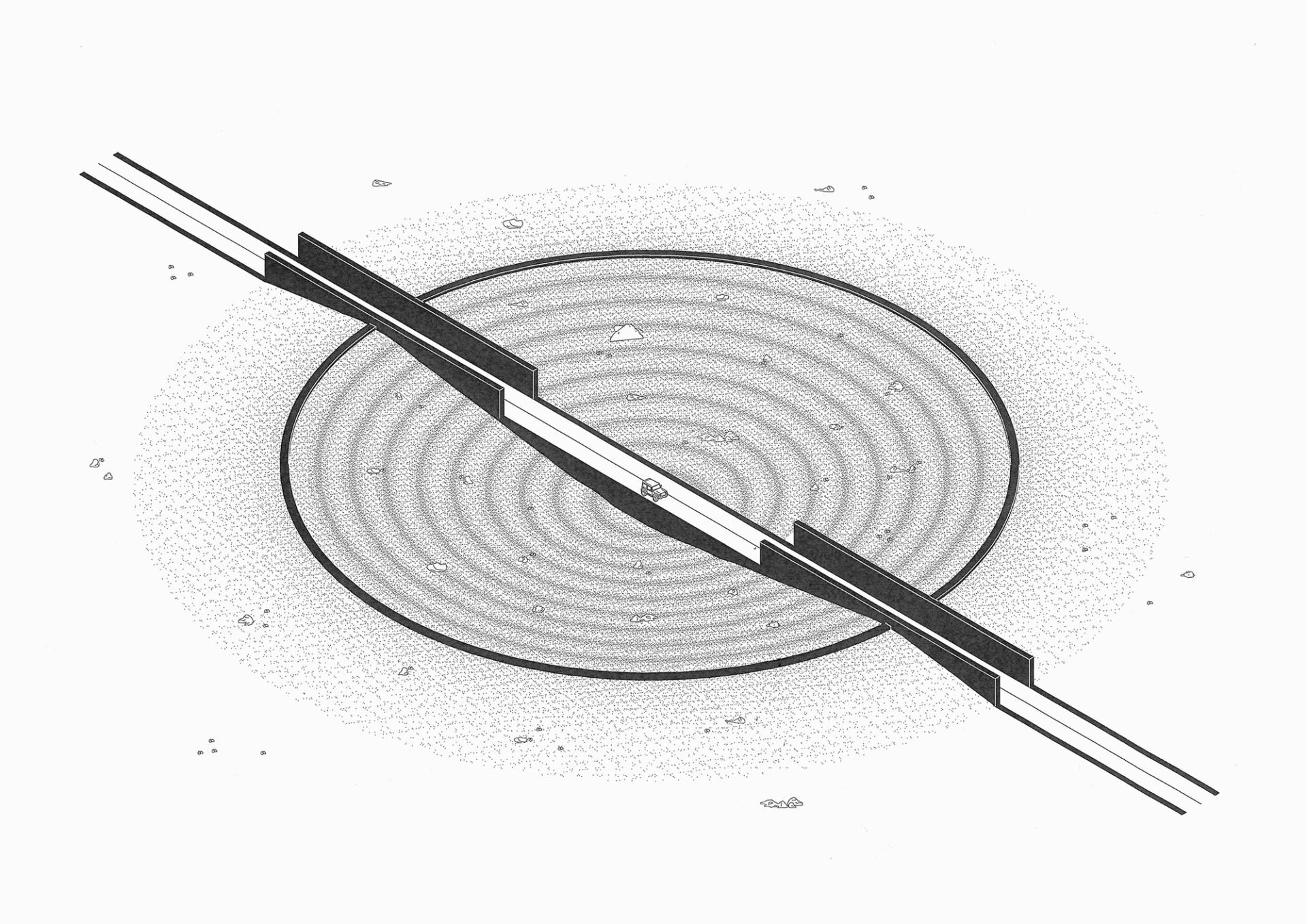
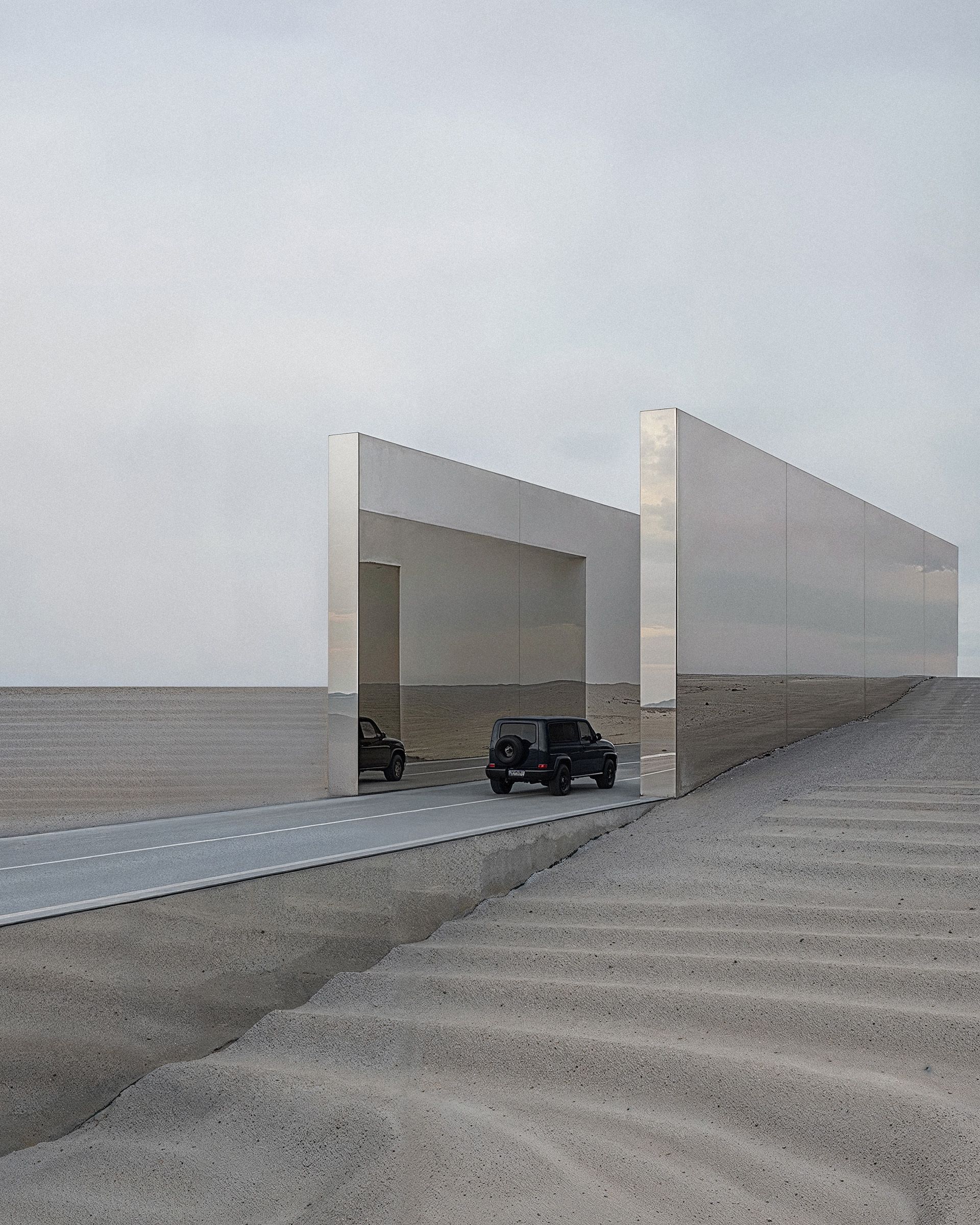
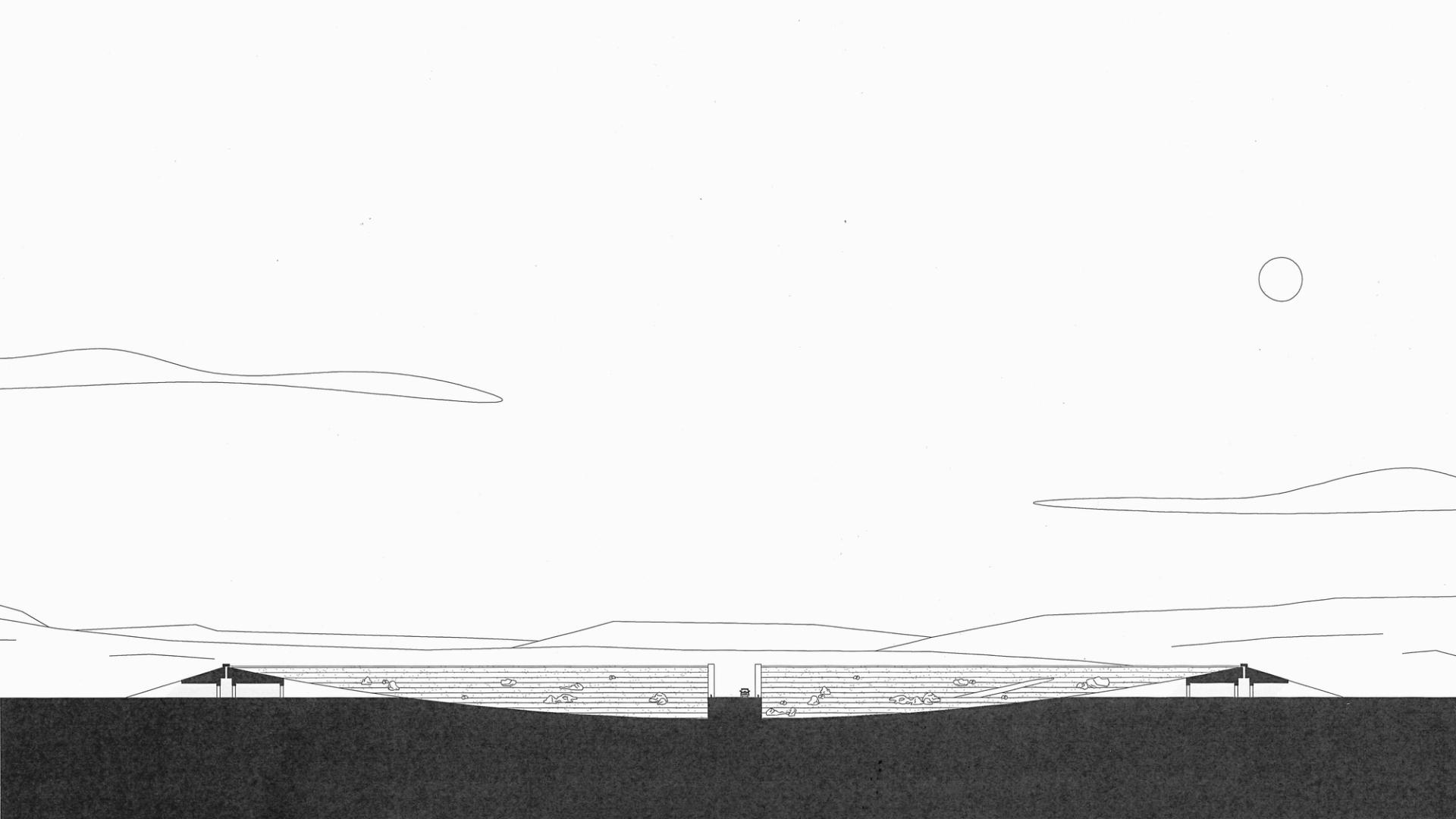
The architectural response is rooted in an elemental idea: the movement of sand. Instead of importing materials or erecting a conventional structure, the project works exclusively with the sand already present on site. The intervention becomes a continuous dune — shaped, displaced, and compacted to generate both protection and space.
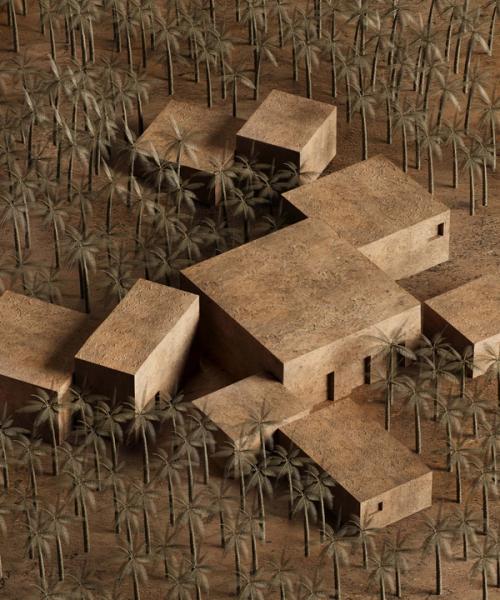
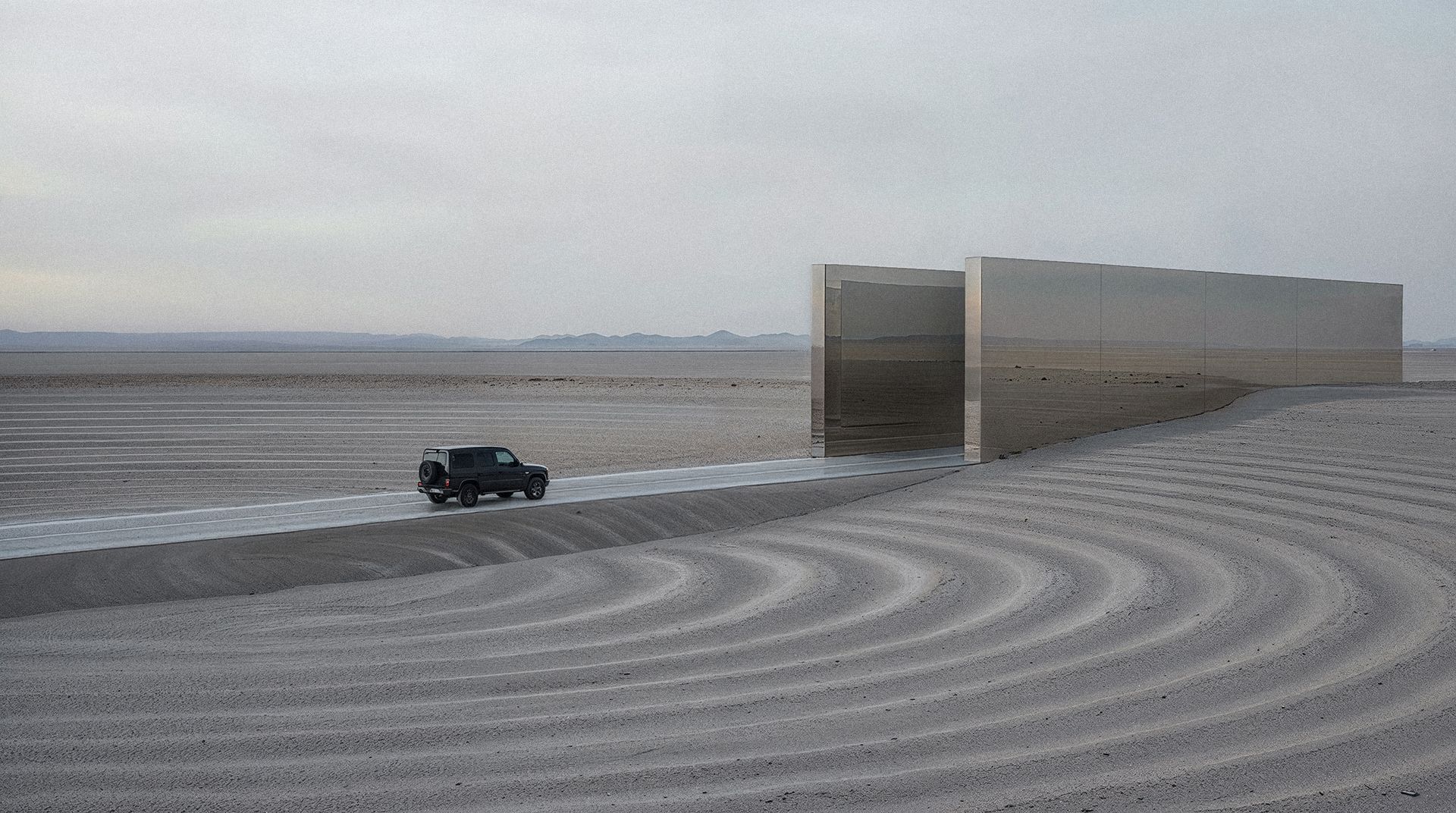
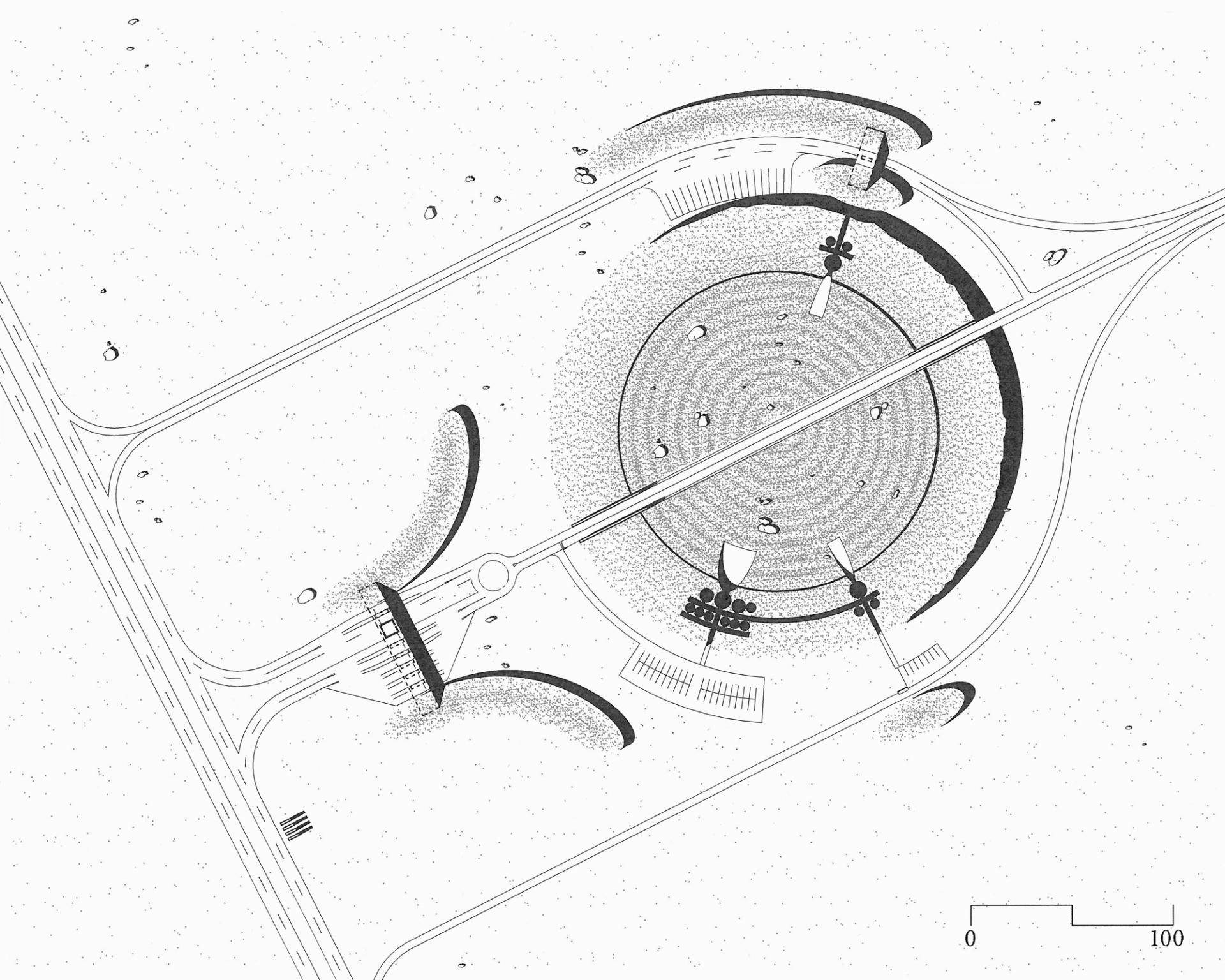
From the outside, it reads as a circular formation gently rising from the terrain. Within it, a void is carved out, revealing a concealed oasis at its centre. The dune operates simultaneously as infrastructure, architecture, and landscape — not an object placed in the desert, but the desert itself reconfigured.
This approach responds to a clear intention: to create a main gate with minimal impact, to establish a landmark that endures as part of the territory, and to build sustainably using only what is already there. The dune, already used on site as a natural safety barrier that vehicles cannot cross, is elevated to the scale of architecture — a gesture that feels both logical and poetic.
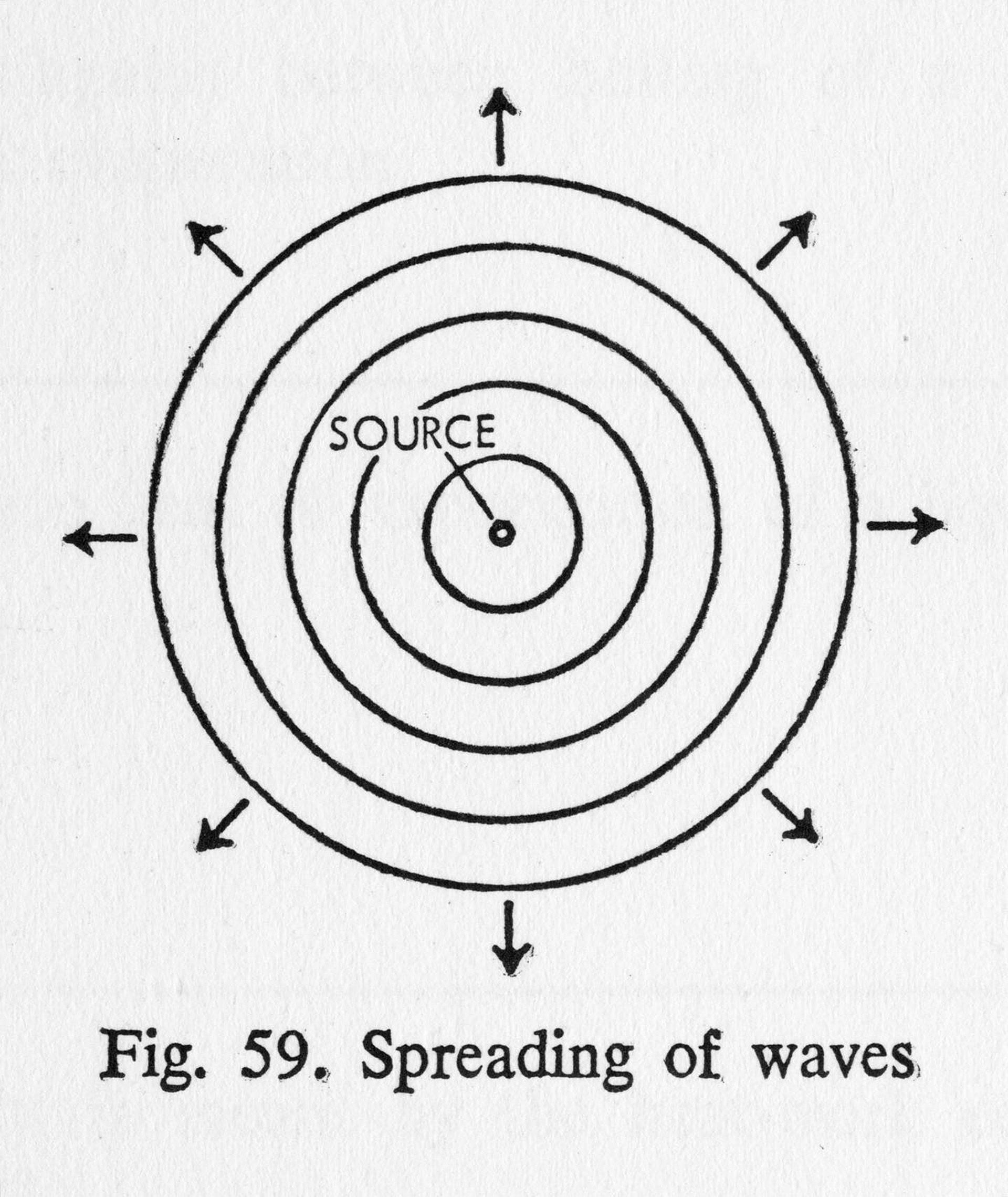
Source Unknown.
The Hidden Oasis
At the heart of the dune, a circular void forms an inner space that welcomes and gathers. The geometry embraces visitors in a subtle yet powerful manner. Organic and precise at once, it evokes the concentric movement of water and the quiet compositions of Japanese karesansui gardens. The project also draws from Land Art practices, where intervention and landscape become inseparable.
Crossing this threshold becomes an experience akin to moving through an art installation: a passage across the desert where a fleeting moment of beauty is briefly held in time.
A Timeless Gesture
References such as the ephemeral works of Andy Goldsworthy, the circular geometry of the Fyrkat Viking Ring Fortress, and the infrastructural precision of the Qanats of Gonabad informed the project’s development.
What unites these precedents is their clarity: geometry understood as an act of belonging rather than domination.
The new main gate does not seek visibility through height or monumentality. Its presence is restrained. From afar, it appears as a dune among dunes. From within, it reveals a space of reception and control, precisely fulfilling its function while remaining materially and formally merged with the landscape.
El Gouna, Egypt
Urban
Private